News
Welfair® General Regulation v4: the practical impact of the new version
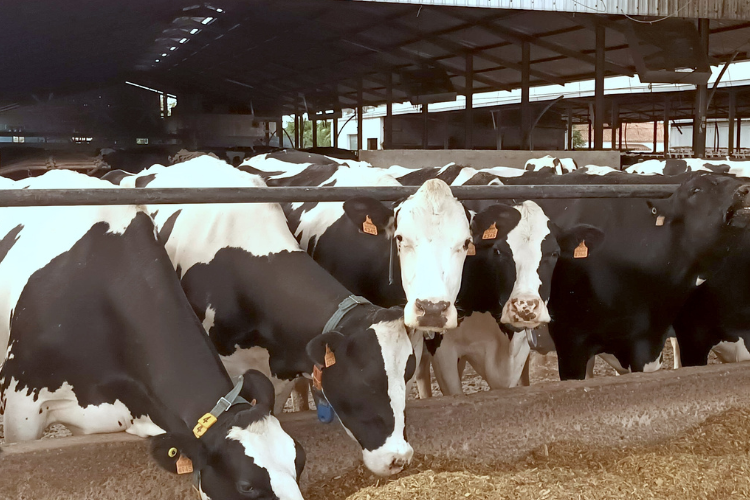
The changes introduced in version 4 of the Welfair® General Regulation are particularly relevant at a time when animal welfare is becoming increasingly tied to sustainability requirements across the agri-food chain.
The new version, which comes into force in May 2026, marks an important shift in how animal welfare certification is interpreted and applied in practice. More than a formal revision, it introduces changes that affect how operators organise themselves, prepare for audits and demonstrate compliance.
For producers, technicians and agri-food businesses with animal production, the key issue is not simply knowing what has changed in the regulation, but understanding how those changes affect operations, records, internal preparation and compliance with the scheme’s requirements.
When a technical regulation is updated, the first reaction is often to focus on identifying what has changed. In practice, that is rarely enough.
The critical point lies in interpretation: understanding how those changes translate into day-to-day practice, what they mean for internal organisation, and what impact they may have on audit preparation and the management of certification over time.
The new version of the regulation may affect different actors across the agri-food chain, including livestock producers, farm managers, veterinarians, technical teams and businesses with animal production. These implications may be reflected, among other things, in:
- audit readiness;
- document management and record consistency;
- coordination between technical structure, production and management;
- the ability to adapt to new scheme requirements;
- interpretation of the implications for different types of operation.
Animal welfare is, by concept and definition, part of the social dimension of sustainability. Its current relevance, however, comes mainly from the way it is now framed within the requirements applied across the agri-food value chain.
Increasingly, it is not enough to claim that certain practices are in place. They must be demonstrated in a structured, consistent and verifiable way.
This is the context in which the evolution of certification schemes becomes particularly important. The update to version 4 of the Welfair® General Regulation should also be seen as a reflection of this trend — tighter control, a higher level of demand, and a stronger need for alignment between practice, records and evidence throughout the value chain.
In light of the new version of the regulation, operators are advised to start by assessing:
- the impact of this update on their internal organisation;
- what technical and documentary adjustments are required;
- the implications for audit preparation and response;
- which aspects require deeper analysis before the new version fully enters into force.
These questions are especially relevant because effective adaptation does not depend only on knowing the changes in abstract terms, but on interpreting them correctly and applying them in practice.
It is in this context that Agricert is promoting the Welfair® General Regulation v4 Technical Session on 23 April at 09:00.
The session will focus on the update to version 4 of the regulation and its practical impact on operators’ activities. It is designed to provide a structured reading of the changes and their technical context, helping participants move towards the operational implementation of the new version.
It is aimed at professionals who work with the regulation in practice and need a deeper understanding of the implications of the new version for preparation, internal organisation and compliance with the scheme’s requirements.
Registration is now open, here.
Context note
This article provides a technical and interpretative overview of version 4 of the Welfair® General Regulation, based on technical update information presented within the scheme. It does not replace consultation of the official regulation in force or the applicable technical documentation.
Agricert sponsors the 2026 IFS Lisbon Forum
Agricert will sponsor the 2026 IFS Lisbon Forum, taking place on 1 October at the Olissippo Oriente Hotel in Lisbon ...
Read moreAdega do Monte Branco certified under the Wines of Alentejo Sustainability Programme
Adega do Monte Branco, located in Estremoz, has achieved certification under the Wines of Alentejo Sustainability P ...
Read moreGrupo Girão obtains Madeira’s first Animal Welfair® certification for egg production
Grupo Girão – Ovo Girão – has become the first company in the Autonomous Region of Madeira to obtain Animal Welfair ...
Read moreAgricert now offers ZERYA® certification
Agricert now offers certification in accordance with the ZERYA® standard, further strengthening its service portfol ...
Read more